
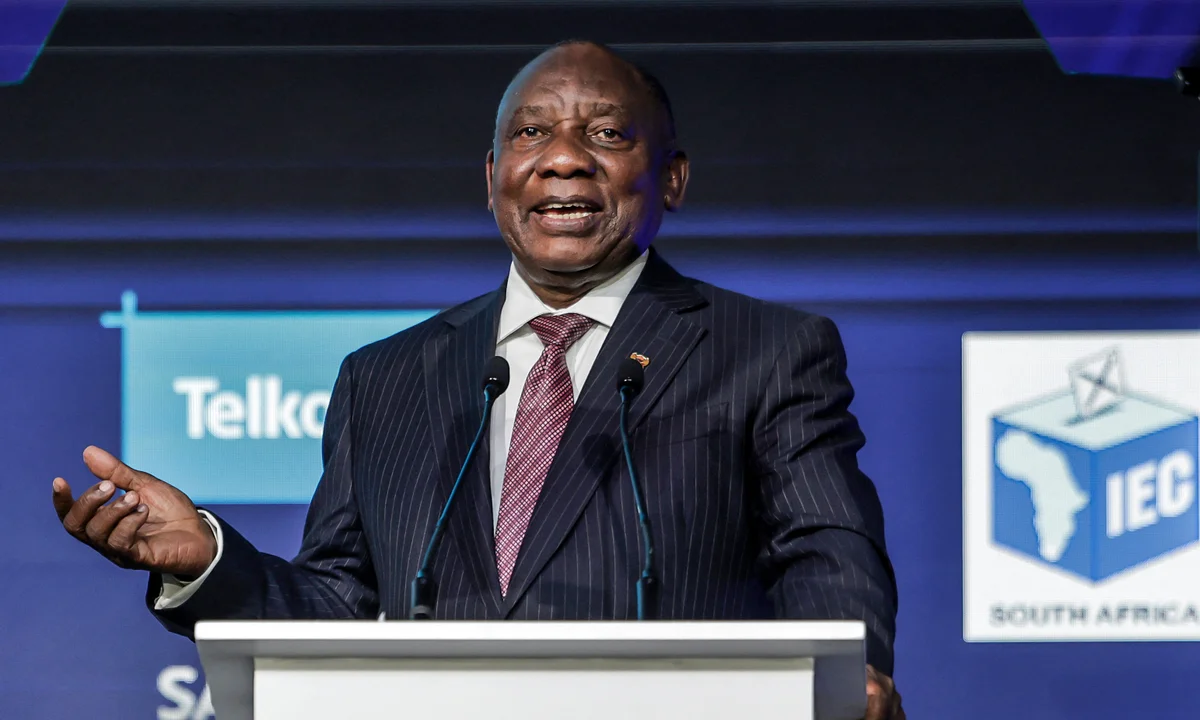
South African President Cyril Ramaphosa defended his land reform policy on Monday against allegation by Donald Trump that laid bare deep divisions within South Africa over racial disparities in ownership, an issue festering since apartheid. The U.S. president said on Sunday, without citing evidence, that « South Africa is confiscating land » and « certain classes of people » were being treated « very badly », adding that he would cut off funding to the country in response. The mining minister, Gwede Mantashe of the ANC, said African countries should « withhold minerals » from the United States in response to any aid cut. Ramaphosa spokesperson Vincent Magwenya told Reuters those words should be « taken in jest » and the government was not seriously advocating such a policy.
Washington committed $440 million in assistance to South Africa in 2023, of which $315 million was for HIV/AIDS. Ramaphosa said U.S. funding accounted for 17% of South Africa’s HIV/AIDS programmed but was not significant in other areas. Bilateral relations were already strained because of South Africa’s warm relations with China and Russia, and its legal action against Israel, a staunch U.S. ally, which Pretoria accuses of genocide. South African exports to the U.S. through AGOA represented 1% of GDP in 2023, of which about half was transportation equipment, according to research by economist David Omojomolo of Capital Economics. He said 56% of exports from South Africa’s automotive sector were AGOA-eligible.
Trade Minister Parks Tau said the government would engage with the U.S. administration and both parties represented in Congress on the continuation of AGOA, which expires this year. We are optimistic that we will remain part of AGOA, » he told Reuters on the sidelines of an African mining conference in Cape Town. Land ownership has been a burning issue in South Africa for more than a century. In 1913, the British colonial authorities passed legislation that restricted the property rights of the country’s black majority. South Africa’s new law allows for expropriation without compensation only in circumstances where it is « just and equitable and in the public interest » to do so.


